Polished Concrete Floors in Gilbert

Concrete floors in Gilbert homes get a second life with Gilbert Polished Concrete: the slab under the carpet, the bare garage floor, the great-room concrete the builder covered with tile. We grind, hone and polish the slab itself with ever-finer diamond tooling and put nothing on top, so the finish can run from flat satin to high shine.

Homeowners come first and small businesses and property managers second. We cover Gilbert, plus Chandler and Queen Creek next door. About 60 percent of Gilbert homes date from 2000 or later, so the early questions are about a builder slab: its cure, its mix and how the surface will look after grinding.

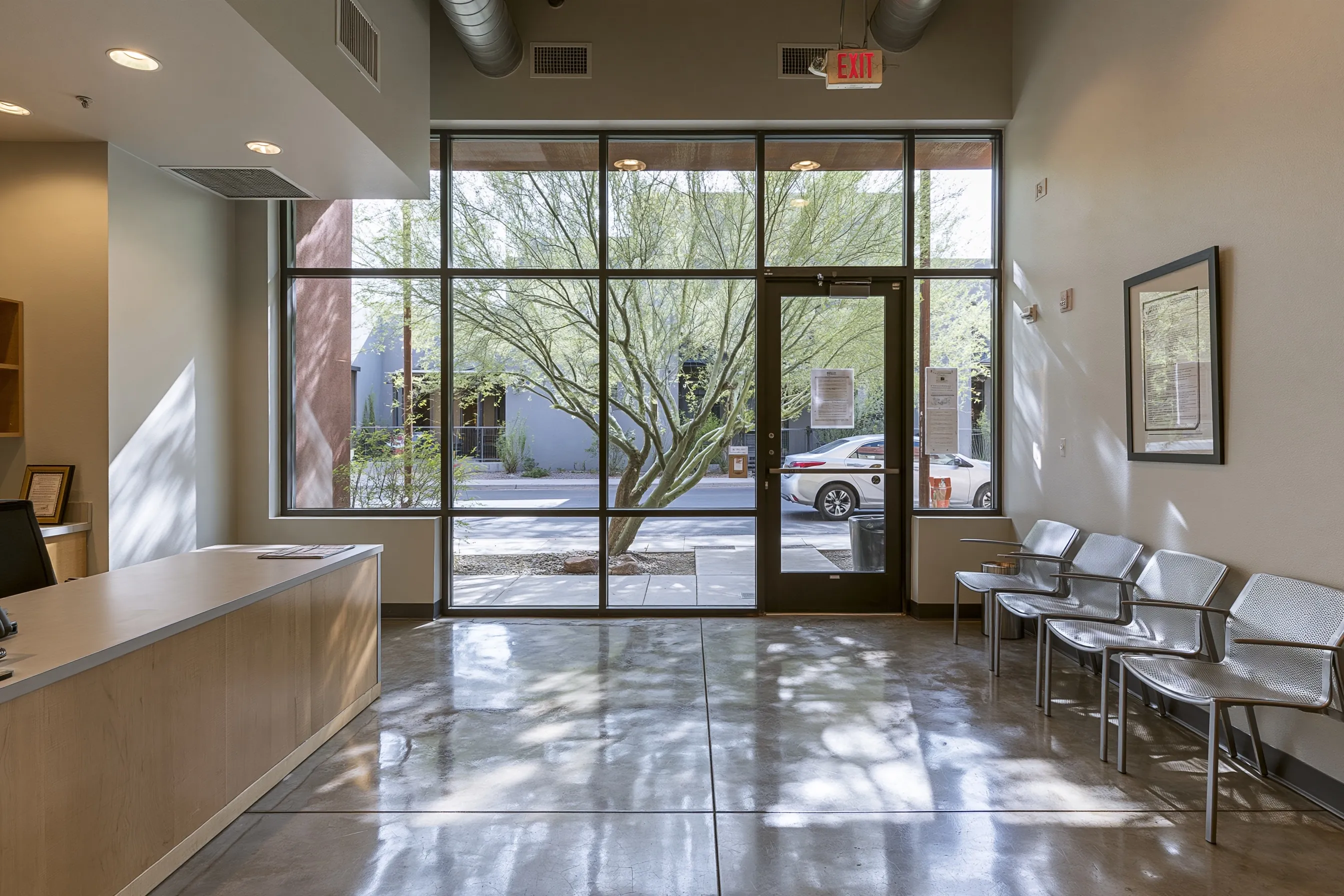
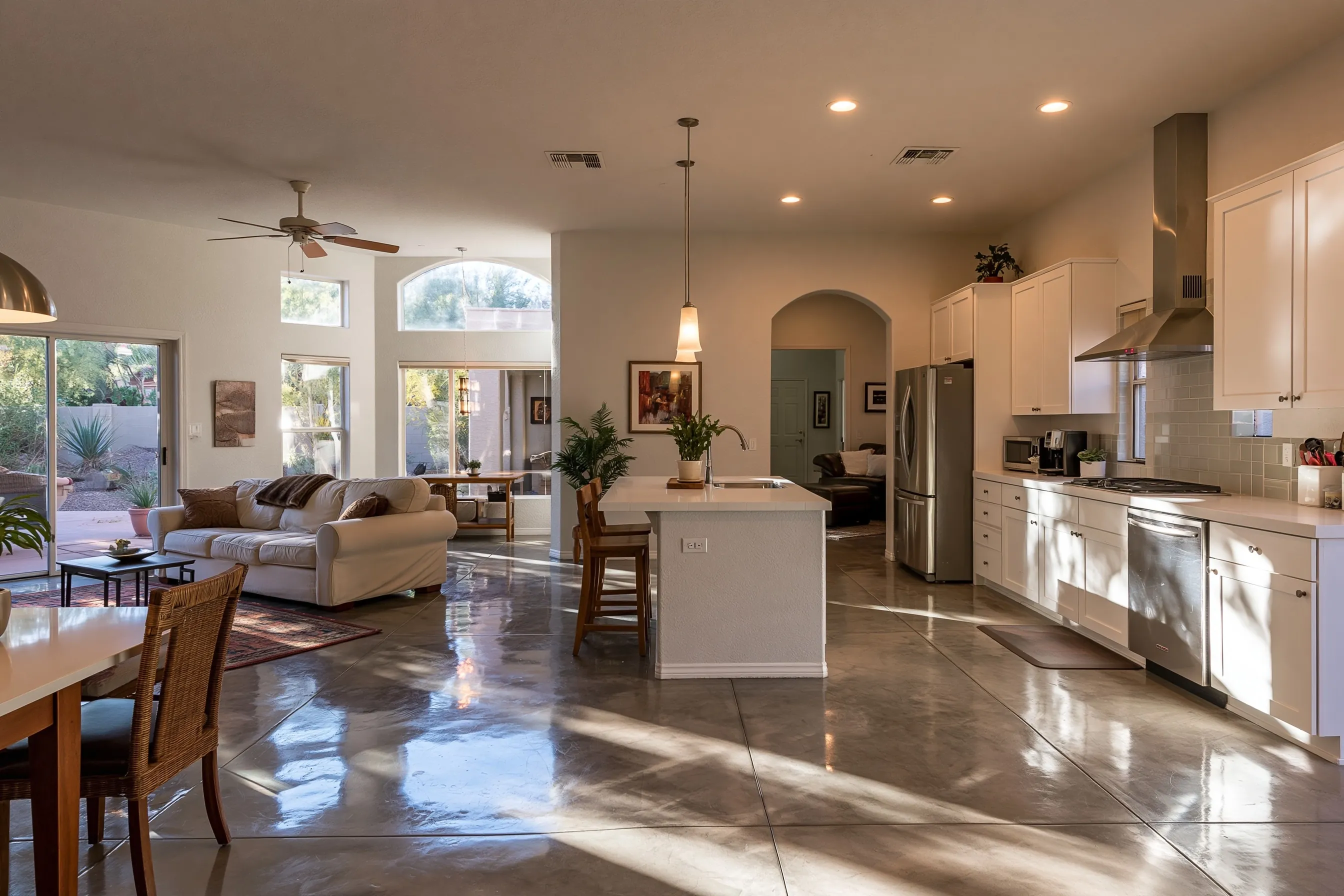
Kitchen and great room of a newer Phoenix-valley house with a warm grey polished concrete floor, white shaker cabinets and window light reflecting on the floor
Polished concrete garage floorsStained and dyed concrete floorsCommercial polished concreteGrind and seal concrete floorsConcrete floor restoration

Our polished concrete services

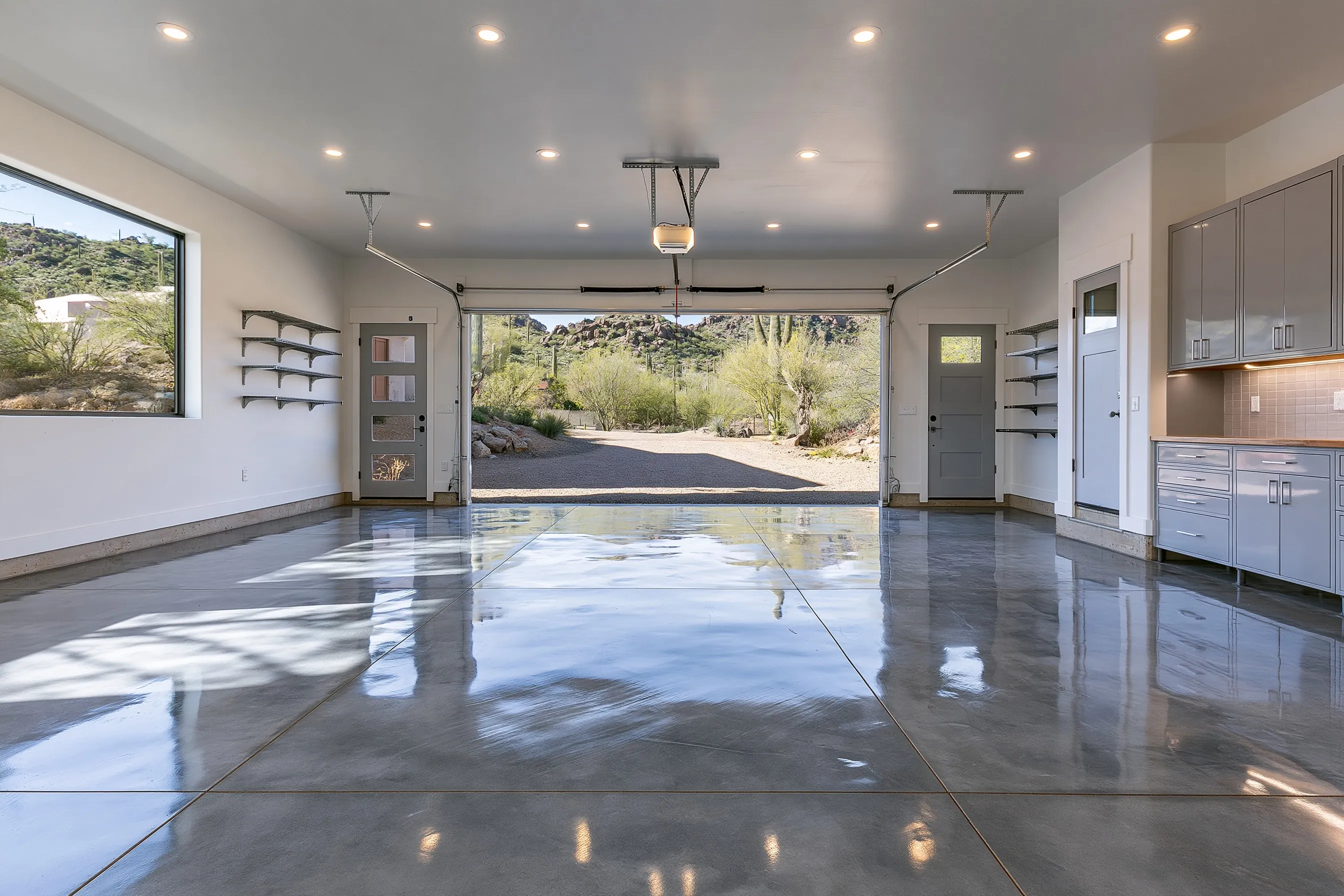
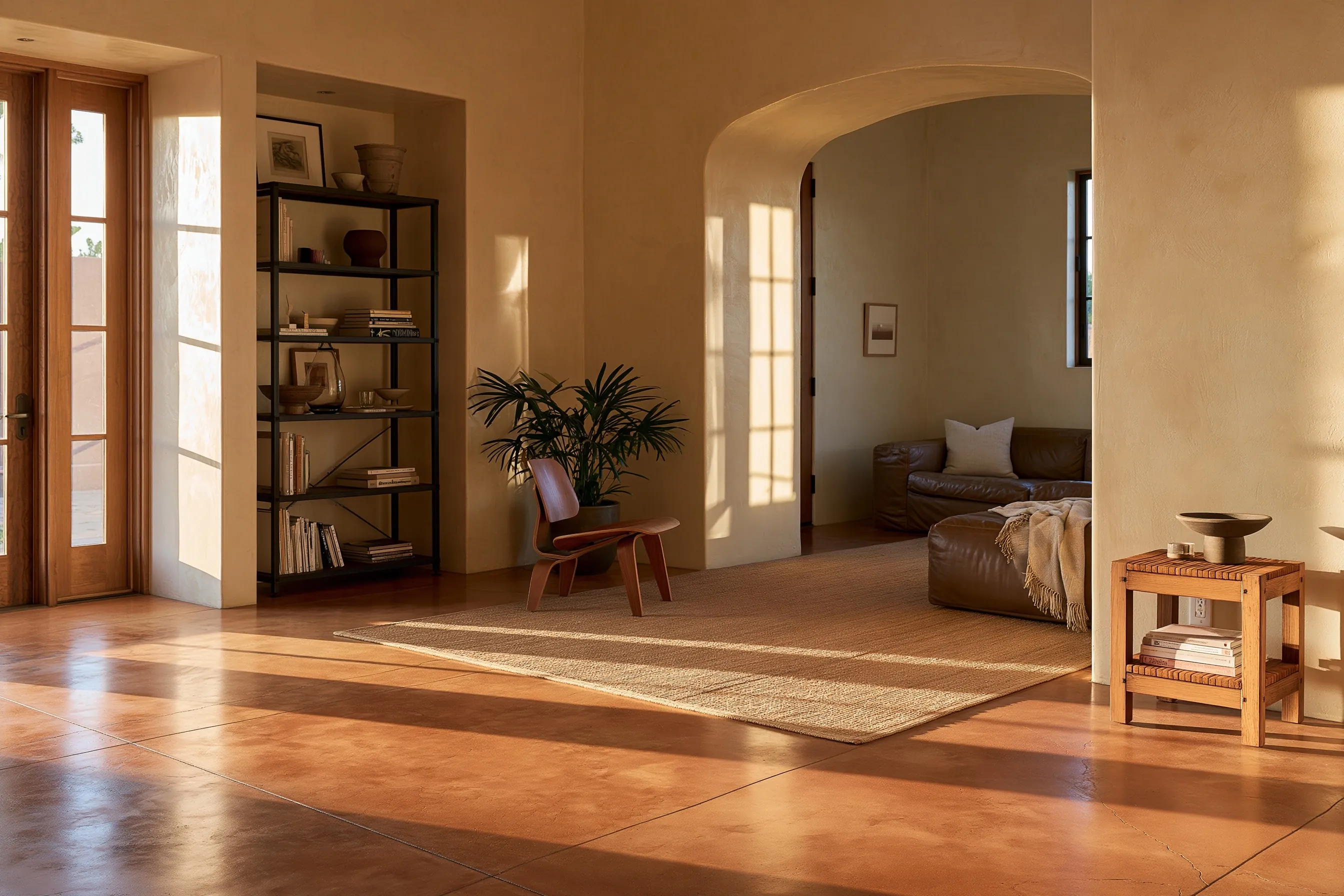
Wide three-car garage with a charcoal dyed and polished concrete floor, wall storage and a desert gravel driveway outsideLiving room with a warm terracotta dyed concrete floor, warm tan plaster walls, an arched passage and a bookshelf in evening light

Polished concrete garage floors

A garage slab is bare builder concrete, with trowel marks, control joints and the stains of whatever was parked or stored on it. Grinding takes the surface down, a densifier hardens it and polishing brings up a satin or brighter shine with no film on top. A three-car garage is a large floor to color with dye, and we say in advance what grinding will not remove.

Stained and dyed concrete floors

Stain and dye put color into an interior floor, from warm terracotta to sage or deep charcoal, on the bare slab or under a polish. The slab decides how even the color looks, because trowel marks, aggregate and patches show through. Patios, driveways and pool decks are outside the work we do.

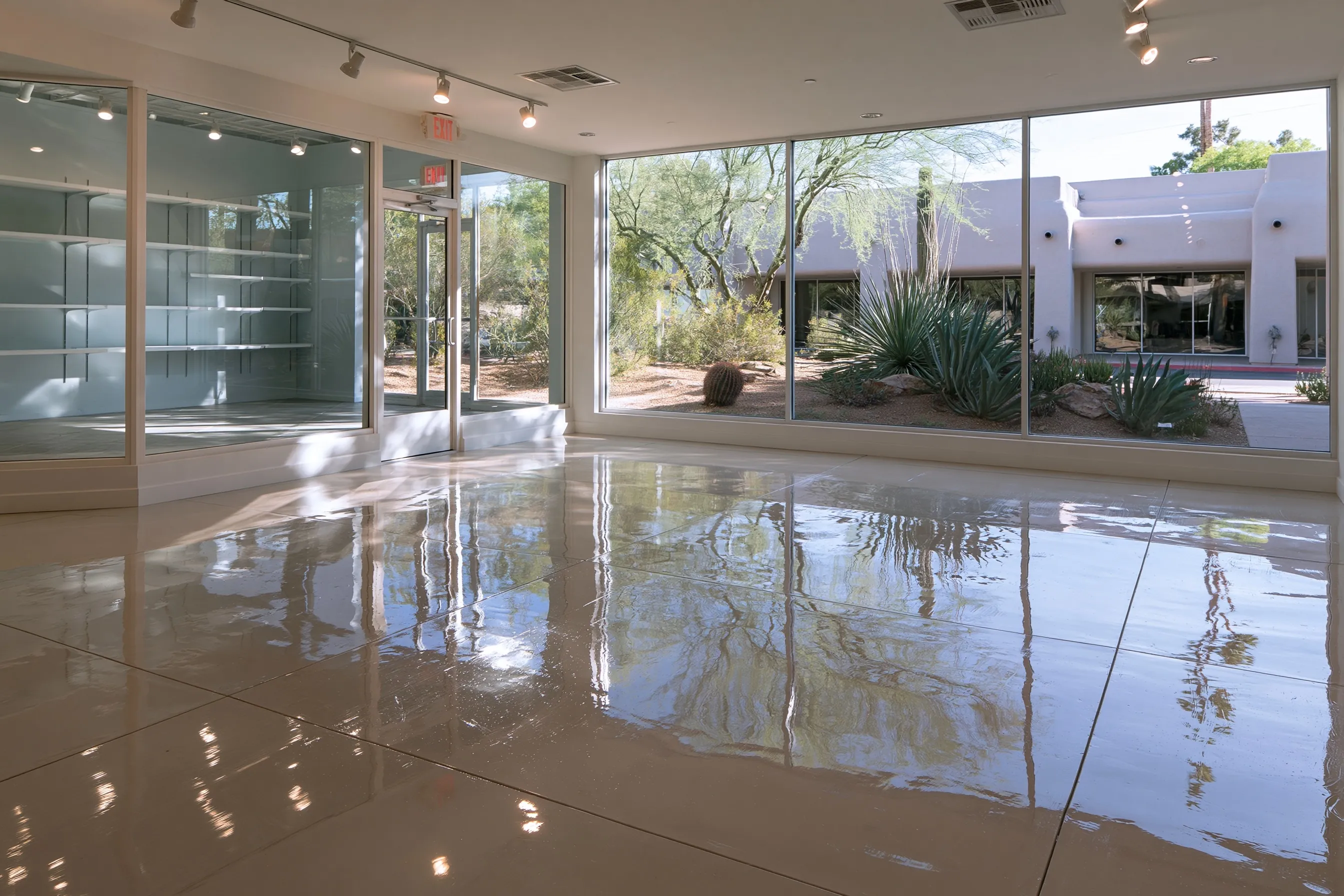
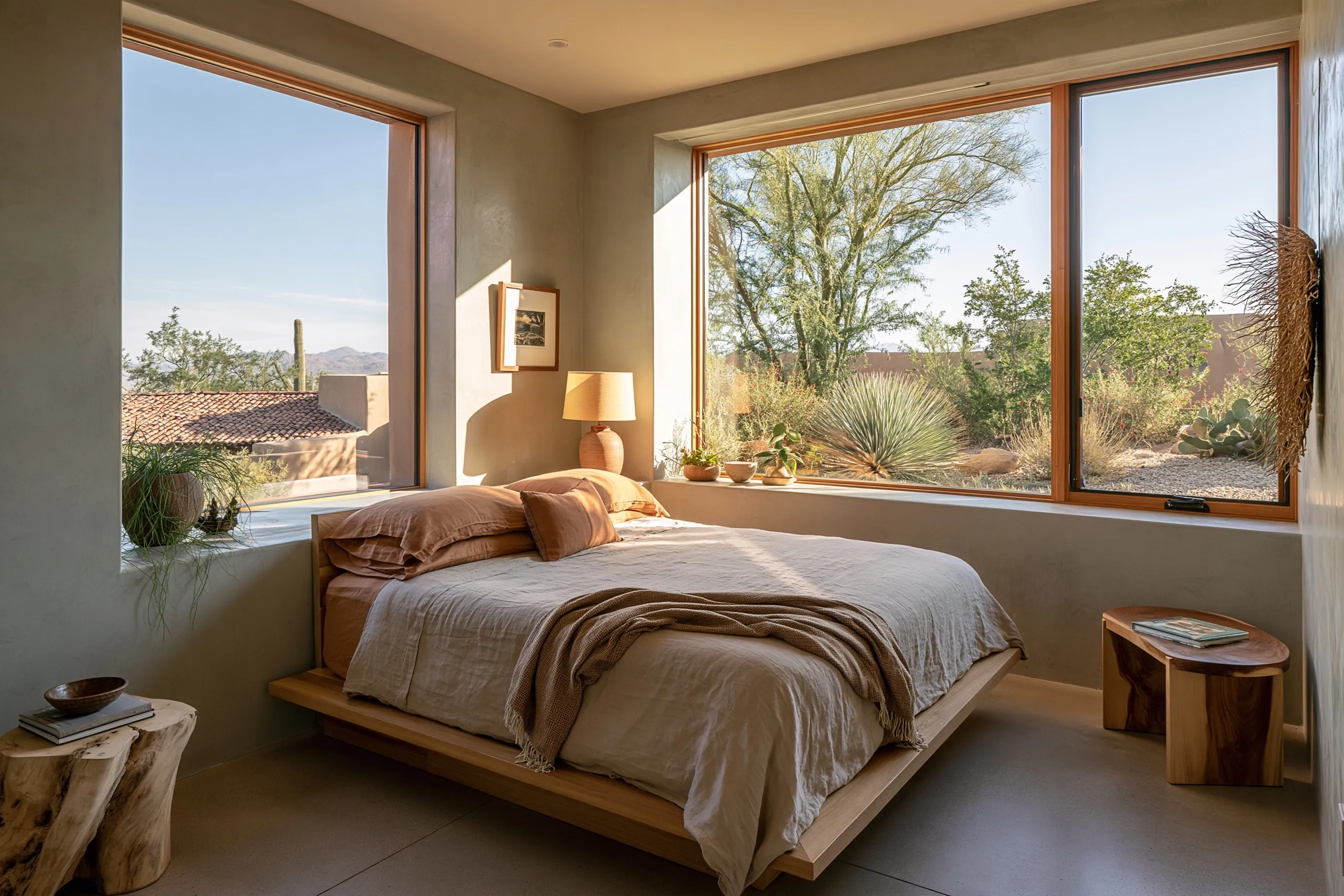
Empty retail showroom with a high-gloss polished concrete floor reflecting storefront glass and display shelvingBedroom with a matte honed satin concrete floor, linen bedding and a window onto desert landscaping and a clay tile roof

Commercial polished concrete

Retail, showroom, office and restaurant floors are planned around opening hours, phasing and foot traffic as much as around the shine. We start from the existing slab or a new one, agree a mockup area on the actual floor and match dust control to a building that is in use.

Grind and seal concrete floors

Grind and seal is the lighter job: the slab is ground and a sealer goes on in place of the multi-step densified polish. It suits a garage, workshop or storage area where a clean, sealed concrete look is enough, and because the sealer is a film it wears and can be recoated.

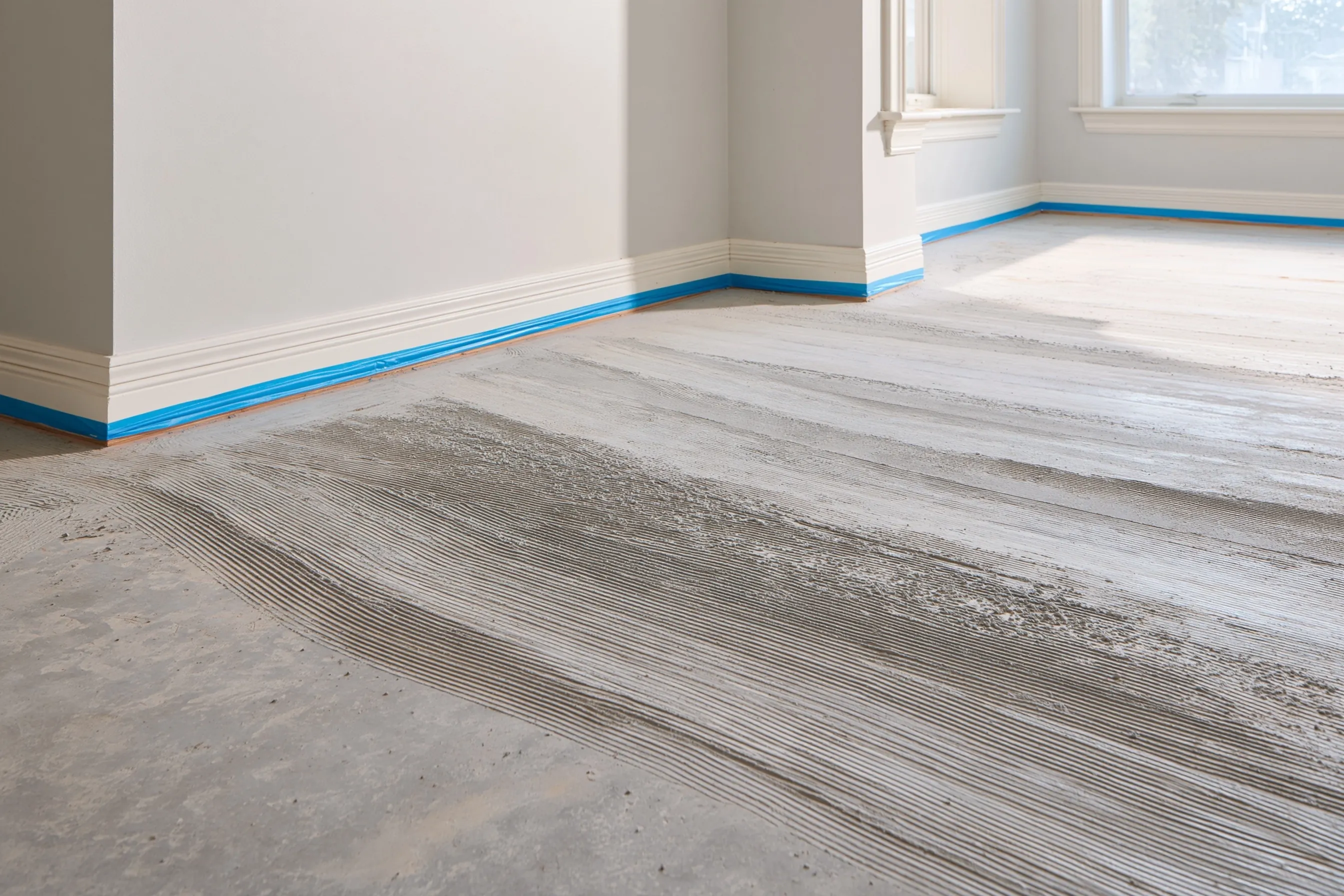
Room with the tile removed, a bare concrete slab with ridges of leftover thinset and blue tape on the baseboards

Concrete floor restoration

Floors under carpet, tile, vinyl, old coatings or glue can be uncovered and repaired before polishing or sealing. Tile leaves thinset, carpet leaves tack strips and glue, and the slab underneath shows its cracks, joints and patches. Older flooring is tested for asbestos before any grinding.

Polished concrete costs

These ranges cover hired labor and materials for typical floor jobs in Gilbert, Chandler and Queen Creek, one line per job size. A plain slab in good shape sits at the low end. More cracks, a darker dye, a higher shine or a cut-up layout push a job toward the open top end.

Polished concrete floors

  • Single room or hall, about 250 sq ft$1,500 – $3,000+
  • Main living area, about 800 sq ft$3,600 – $7,200+
  • Whole house, about 2,000 sq ft$8,000 – $16,000+
What is included

The slab ground through the diamond steps, cracks and joints filled, a densifier, a satin or semi-gloss polish and a stain guard. Taking up carpet or tile, dye and larger repairs are on their own lines.

Get a free quote

Polished concrete garage floors

  • Two-car garage, about 450 sq ft$1,800 – $4,000+
  • Three-car garage, about 650 sq ft$2,600 – $5,200+
What is included

Degreasing and grinding the garage slab, filling cracks and saw-cut joints, a densifier, polishing and a stain guard. A dye color adds a little per square foot and sits in the upper part of each line.

Get a free quoteSee an example project

Stained and dyed concrete floors

  • One room, about 250 sq ft$1,800 – $3,500+
  • Living area, about 800 sq ft$4,400 – $9,000+
  • Whole house, about 2,000 sq ft$10,000 – $20,000+
What is included

The polish lines plus one dye or stain color worked into the slab and a stain guard. A second color, a darker color or a pattern costs more.

Get a free quoteSee an example project

Commercial polished concrete

  • Small shop or office, about 800 sq ft$3,200 – $6,400+
  • Retail or restaurant, about 2,500 sq ft$7,500 – $15,000+
  • Large floor, about 8,000 sq ft$16,000 – $36,000+
What is included

Grinding, filling joints and cracks, a densifier, polishing to the shine you choose and a guard, planned around your opening hours. Moving shelving and fixtures is not included.

Get a free quoteSee an example project

Grind and seal concrete floors

  • One room, about 250 sq ft$1,000 – $2,000+
  • Two-car garage, about 450 sq ft$1,400 – $2,700+
  • Shop or storage room, about 1,000 sq ft$2,500 – $5,000+
  • Large floor, about 5,000 sq ft$8,800 – $20,000+
What is included

A degrease, a grind or two to smooth the surface, cracks filled and a rolled-on sealer. Patching, glue removal and dye are separate lines.

Get a free quoteSee an example project

Concrete floor restoration

  • Carpet and glue removed from one room, about 250 sq ft$400 – $1,000+
  • Tile and thinset removed, about 500 sq ft$1,000 – $2,800+
  • Carpet and glue removed from a whole floor, about 1,500 sq ft$1,900 – $4,500+
  • Cracks and saw-cut joints filled, about 50 ft$200 – $500+
What is included

Carpet, tile or coatings pulled up, glue and thinset ground off and cracks filled, leaving a slab that is ready to polish or seal. Those finishes are on the other lines, and testing older glue is extra.

Get a free quoteSee an example project

Ranges are 2026 estimates, not quotes. Call today for a free, personalized quote.

What polished concrete is

A polished floor is the concrete slab with its surface refined. Diamond tooling grinds the top away, then honing and polishing steps with ever-finer diamonds leave a smooth, light-reflecting floor. Epoxy, polyaspartic and urethane work differently, as films laid over a prepared slab; here nothing sits on top except an optional guard.

Grinding, honing and polishing

Coarse diamonds in a metal bond cut first, flattening the surface and exposing the sand and stone under the top skin. Finer resin-bond diamonds follow, and every pass raises the shine. Honing is the matte-to-satin stage in the middle of that sequence.

Densifier and guard

A densifier is a liquid silicate that reacts with the lime in the cement paste and hardens the ground surface, which makes it less porous and less dusty. A guard or stain protector is an optional thin coat on top of that, used where a floor needs more resistance to spills.

Four levels of shine

Appearance is named in four levels: flat (ground), satin (honed), polished and high polish. The higher the level, the more the floor reveals about flatness and flaws, so choosing a level shapes the whole job.

Cream, salt-and-pepper and aggregate

How deep the grinder goes decides what you see. The Concrete Polishing Council sorts finishes into three classes: cream, 85 to 95 percent cement fines with some fine aggregate; salt-and-pepper, 85 to 95 percent fine aggregate; and full aggregate exposure, 80 to 90 percent with the larger stones showing. The chart is a guide measured over a random 10 foot by 10 foot square, and the result depends on the mix, the placing and the finishing. That is why a mockup on your own slab comes before the whole floor.

New slab or existing slab

The condition of the slab decides the result more than any step in the process. A polished floor shows the concrete that was poured: its flatness, joints, patches and cracks all come through, and polishing does not level a floor.

A newer builder slab

Timing and mix matter in a house that is new. Commercial specification guidance asks for a slab at least 28 days cured before polishing, notes that curing compounds can slow drying and discolor the surface, and prefers a vapor barrier under the slab. Admixtures can cause color variation, and a mix with portland-limestone cement, a high water-cement ratio or bleed water finished into the surface can leave a weak one. Residential builders may not pour to that specification, so a builder slab is not guaranteed to match it. If you are building or buying new, ask the builder what mix and curing the slab had, and keep storage and taped-down protection off the floor.

A slab under carpet or tile

An older floor has been covered since the house was built. The covering comes off, glue and thinset are ground away and the surface is tested for hardness before polishing begins: ACI 310.1 calls for a Mohs hardness above 4. Cracks, saw-cut joints and old patches stay visible once polished, so they are filled or repaired and not erased.

Our process

01

Inspect the slab

The slab is looked at before it is quoted: what covers it now, where the joints and cracks run and how the surface feels. A hardness check and a small test area show whether it can reach the shine you want.

02

Grind and repair

Metal-bond diamonds clear coverings, glue and thin coatings and open the surface. Cracks and joints get filled and old patches mended, yet all of it stays visible. Dust control is planned as well: OSHA’s silica table lists water fed to the cutting surface, or a collector with a HEPA-filtered vacuum, as controls for walk-behind grinders.

03

Densify

A liquid densifier goes on the ground slab to harden the surface and reduce dusting. How long it needs depends on the product and the age of the concrete.

04

Polish

Step by step, finer resin-bond diamonds follow until the floor reaches the shine chosen at the test area. Each pass removes the scratches left by the one before, so no step is skipped.

05

Guard and clean up

A guard goes on only where it suits the floor, and the floor is cleaned. Day-to-day care is routine: sweep, damp mop with the cleaner recommended for that finish and wipe up acidic or alkaline spills promptly.

Polished concrete in Gilbert homes

Housing in Gilbert is recent. Roughly 4 percent of homes predate 1980, about 36 percent went up from 1980 to 1999 and 60 percent from 2000 on, with 2003 as the median year. Single-family houses make up about 85 percent of the stock, and the median owner-occupied value is $575,100.

That points to recent builder slabs, garage floors that have only ever been bare concrete, and owners weighing whether to uncover the concrete under builder carpet or tile. Older floors in the smaller share of pre-1980 homes are a different job, with their own checks before any grinding.

What changes the cost

The price depends on the slab and the finish, so the ranges on this page are estimates. We quote after seeing the floor. These are the factors that move a price:

  • The size of the floor, since small rooms and garages carry setup costs
  • What covers the slab now: carpet, tile, glue, paint or a coating
  • The level of shine, from satin to high polish
  • How deep the grind goes, for cream, salt-and-pepper or aggregate
  • Dye or stain, and how many colors
  • Cracks, joints and patches to fill
  • Edges, stairs and obstacles in the room

Service area

Besides Gilbert itself, the work reaches Chandler, roughly 5 miles away by road, and Queen Creek, roughly 15 miles out, where about 91 percent of homes date from 2000 onward. Each has its own page and its own building department. For another nearby address, ask.

Frequently asked questions

How much does polished concrete cost?

The ranges on this page are estimates, and the price depends on the floor. Size, what is on the slab now, the level of shine, the depth of grind, color and the number of cracks and joints to fill all change the price, and small floors carry setup costs. The list above sets out the factors, and we quote after seeing the slab.

Can you polish an existing slab?

Yes, if the surface is sound. Carpet, glue, tile and thinset come off first, and the slab is tested for hardness. Cracks, joints and patches will still show afterward, because polishing refines the surface and does not hide it.

Is polished concrete slippery?

It depends on the finish, the contaminants and the use. A shiny look says little about grip: oil, grease and water all make polished concrete slick. Entrance mats help, and if the floor will be wet, ask for a test suited to that use.

What are the downsides of polished concrete?

It shows the slab as it is, including joints, patches and cracks, and it does not flatten a floor. A weak surface may not reach the finish you want. It is also not chemical containment, so a spot where chemicals are used regularly may call for a different system.

Polished concrete or epoxy?

They are different systems. Polished concrete refines the slab and leaves no film to peel, but it gives up the chemical and stain resistance of a film coating. We do polishing, not epoxy, so for a garage that will see heavy chemical exposure it is worth deciding what the floor has to withstand first.

Will polished concrete crack?

Concrete cracks with or without polish. Control joints are planned cracks, placed to steer where the slab splits; they do not prevent cracking, and polishing leaves them visible, so they are filled. Hairline cracks get filled or left showing. A crack that keeps widening needs an engineer’s eye.

What should I check before hiring a floor contractor?

Arizona lets unlicensed contractors take only small jobs: under $1,000 in labor and materials, casual or minor work and nothing that needs a permit. Larger work goes through licensed contractors, and the Registrar of Contractors website lets you look up a license. Ask for the license and the scope in writing.

Request a free polished concrete quote

Describe where the floor is and how large it is, what covers it at present, and whether it belongs to a home or a business. We'll get back to you soon with an estimate or any questions we have. Estimates are free and there's no obligation.

Call (888) 835-6411

Call (888) 835-6411