
Carpet, tack strip and glue
Carpet and its tack strip go first. Where carpet or linoleum was glued down, the adhesive left behind is ground off in a separate pass before any polishing.
Typical cost in Gilbert
Floors hidden under carpet, tile, vinyl, old coatings or glue can be brought back by Gilbert Polished Concrete. The work uncovers the slab, strips what stuck to it and repairs what can be repaired, ready for polishing or sealing.
We serve Gilbert and nearby Chandler and Queen Creek. About 4 percent of Gilbert’s homes were built before 1980, so the asbestos checks below apply to a smaller share of floors here than in cities with older housing.
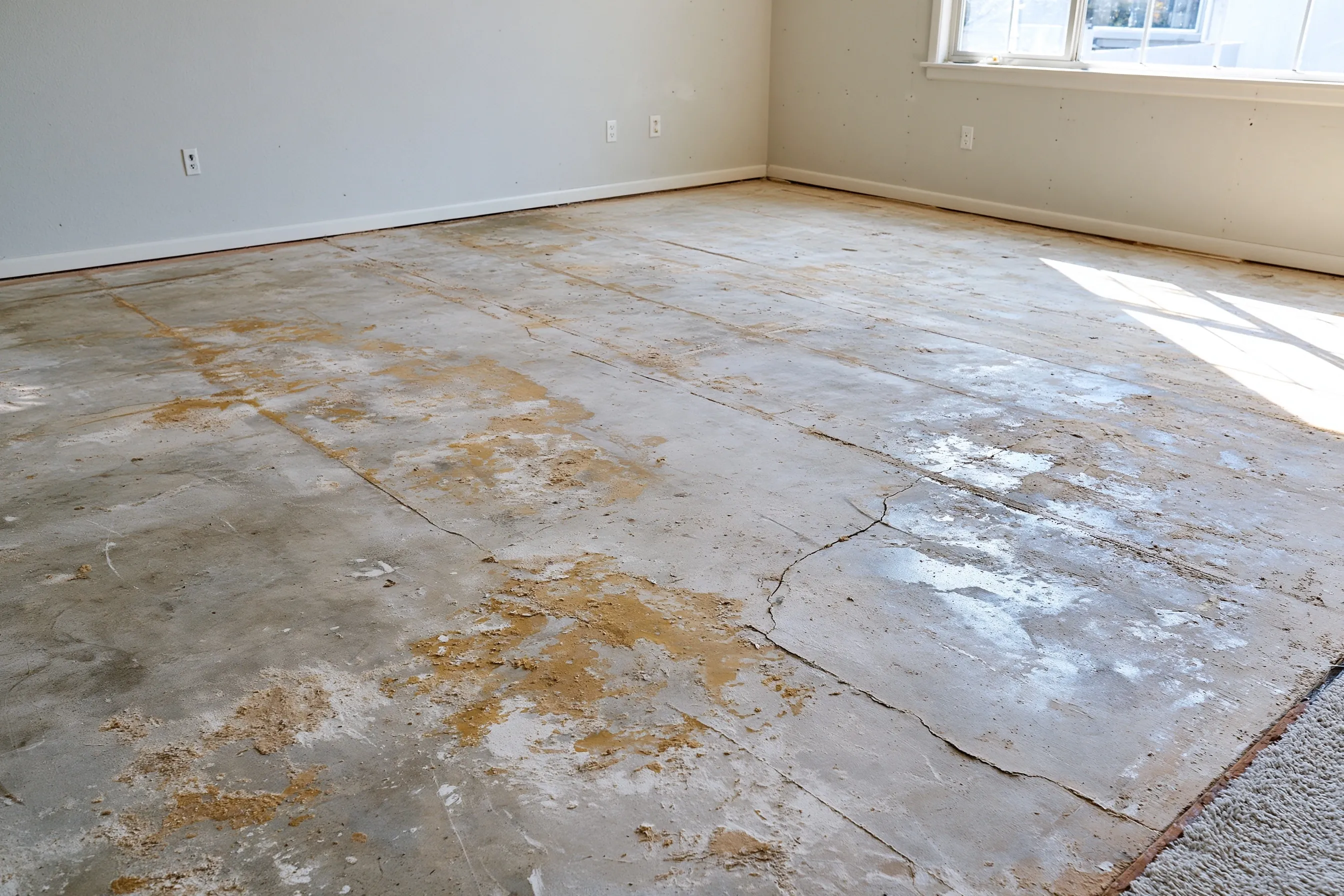
Carpet and its tack strip go first. Where carpet or linoleum was glued down, the adhesive left behind is ground off in a separate pass before any polishing.
Ceramic tile comes off with its thinset, which leaves ridges and a rough surface. The thinset is ground down level with the slab. The wall edges are taped and protected first.
Paint, old epoxy and sealers are ground off, and a test area shows how the surface comes up. What remains underneath is the slab as it was finished.
Asbestos can be present in old floor tile and in black mastic under it, and grinding can release it. Maricopa County’s Air Quality Department handbook counts a residential building used or once used commercially as a facility, unlike an owner-occupied parcel of four or fewer dwelling units. It also states that resilient floor covering becomes regulated material when ground or sanded, and that mastic may turn friable under mechanical tools.
This is not legal advice, and a rule that does not apply does not make asbestos safe. Suspect tile and mastic should be tested before any grinding. Gilbert is in Maricopa County; an address in Pinal County is covered by a different air quality program.
Control joints are planned cracks that guide cracking and do not stop it, and joints and patches show on a polished floor. They are filled or repaired, and still visible. Polishing does not flatten a slab, and hand-polished edges at walls look different from the field.
If a crack is wide, has shifted or keeps moving, it needs a structural engineer. We do not do that work.
A slab that has been covered since construction can show moisture marks, saw cuts, patched areas, trowel marks and a weak surface. Mohs hardness above 4 is required by ACI 310.1 before polishing, and a weak surface can mean more aggregate loss and a lower gloss. A slab without a vapor barrier can show moisture-driven color variation.
A test area on the real slab shows what it will do, and the plan is adjusted from that.
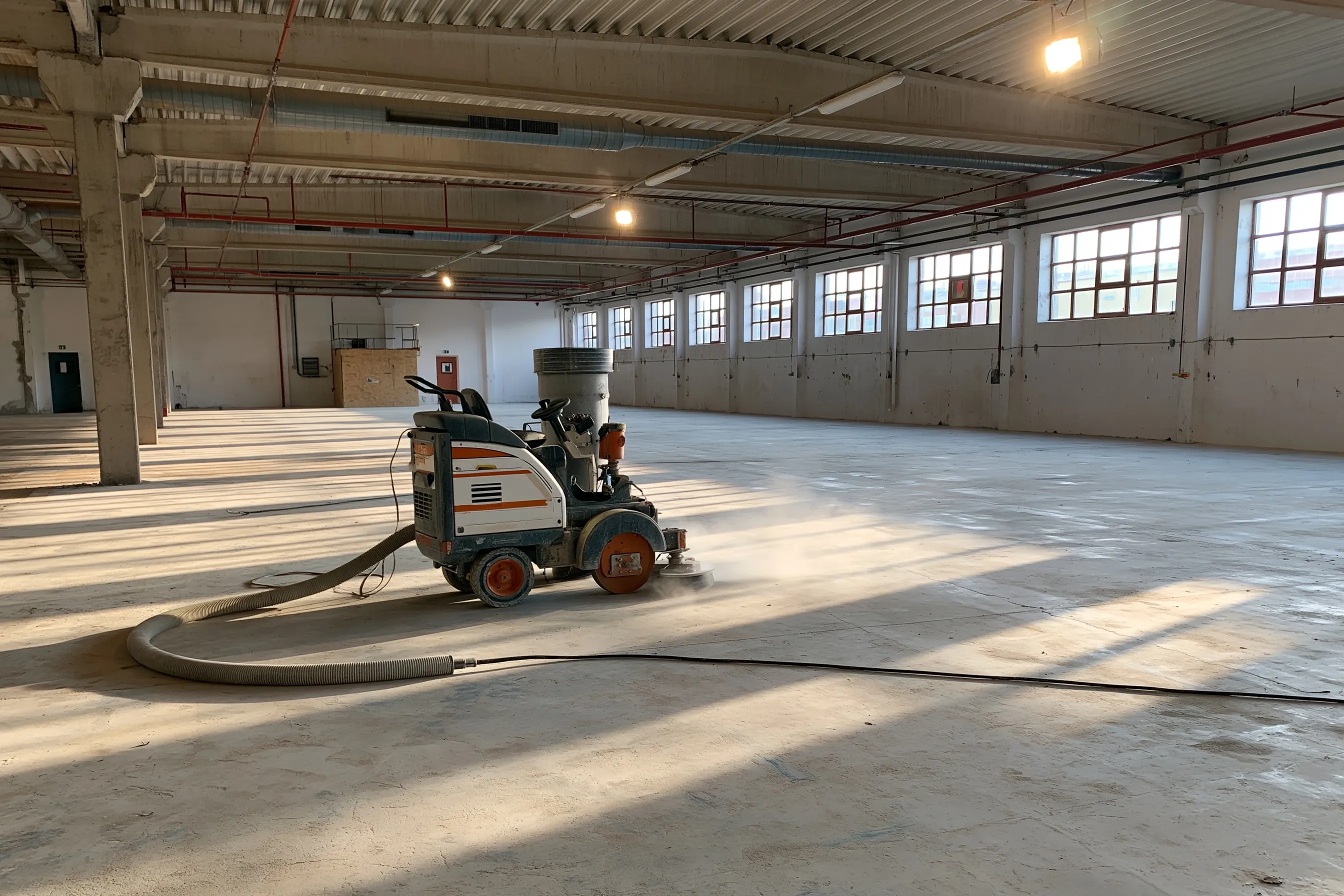
Yes, provided the surface is sound. First the coverings are removed, then the slab is ground and tested, and the finish you chose is built from that point.
It is ground off with diamond tooling as its own step, ahead of densifying and polishing.
No. Cracks, joints and patches are filled or repaired and stay visible on a polished floor.
Uncovering is only the first stage; what happens next depends on the room. A bare garage slab can go on to polished concrete garage floors, and a living area that wants color can go on to stained and dyed concrete floors. The Gilbert Polished Concrete home page lists the other services.
What covers the floor now, about how big is it and how old is the house? We'll get back to you soon with an estimate or any questions we have. Estimates are free and there's no obligation.
Call (888) 835-6411