New slab or existing floor
A tenant improvement starts with the existing slab: adhesive, coatings, patches and joints from the last tenant are removed or repaired, and the surface is tested for hardness before polishing. A new slab is a different case, with its own cure time and mix. Specifications ask for at least 28 days of cure before polishing.
In either case the mockup is done on the actual slab, and polishing does not flatten it. Edges along walls and columns are done by hand and can look different from the field.
Dust, noise and downtime
Grinding means dust and noise, so the work is scheduled around when the space can be shut. For walk-behind floor grinders, OSHA’s silica table gives two routes: water fed to the cutting surface without a break, or a dust collector the manufacturer recommends, with a 99 percent efficient filter and, indoors, a HEPA vacuum between passes.
The plan also covers protecting finished floor from foot traffic and trades that follow. We do not promise how long a floor will take before we have seen it.
Shine and wet areas
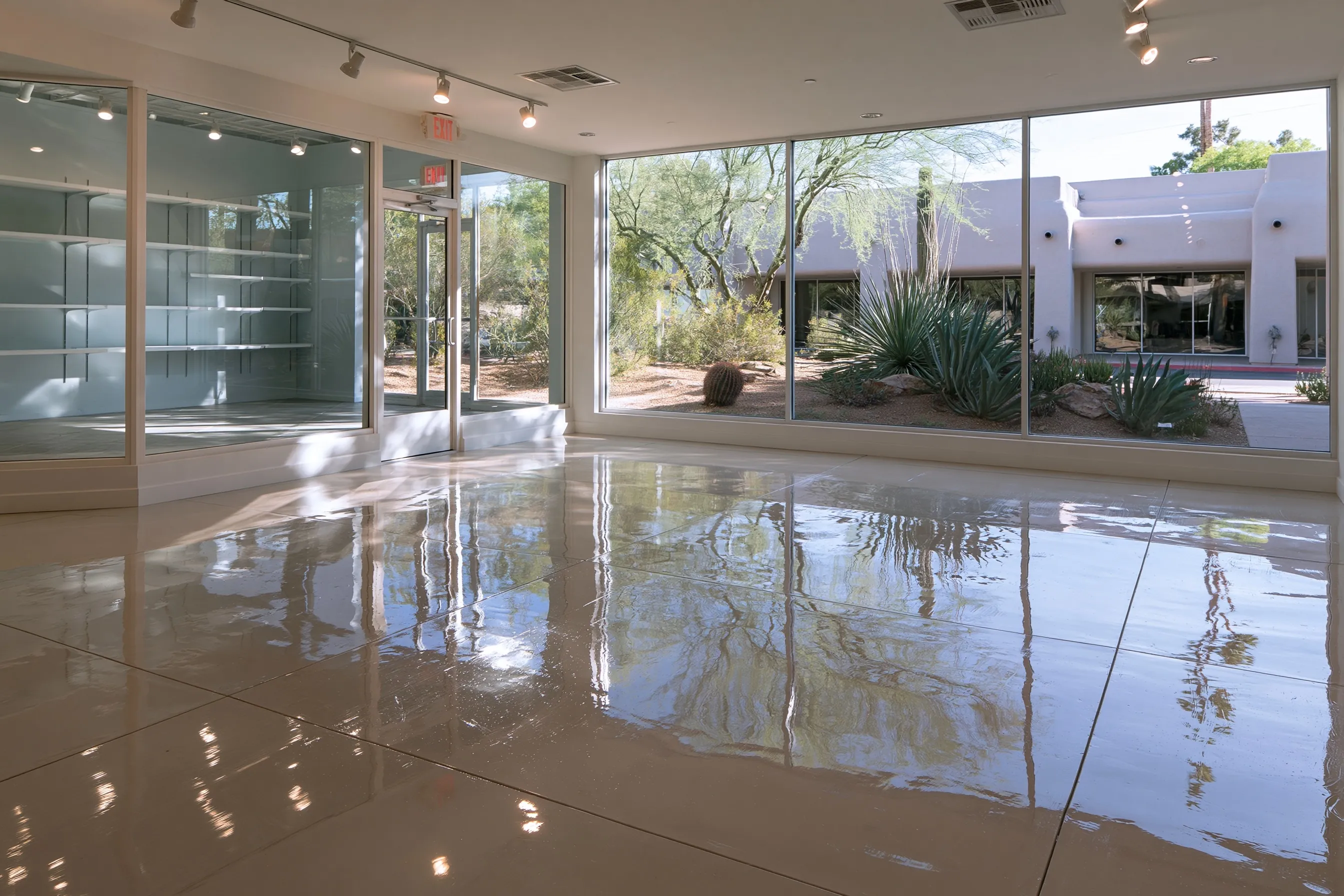
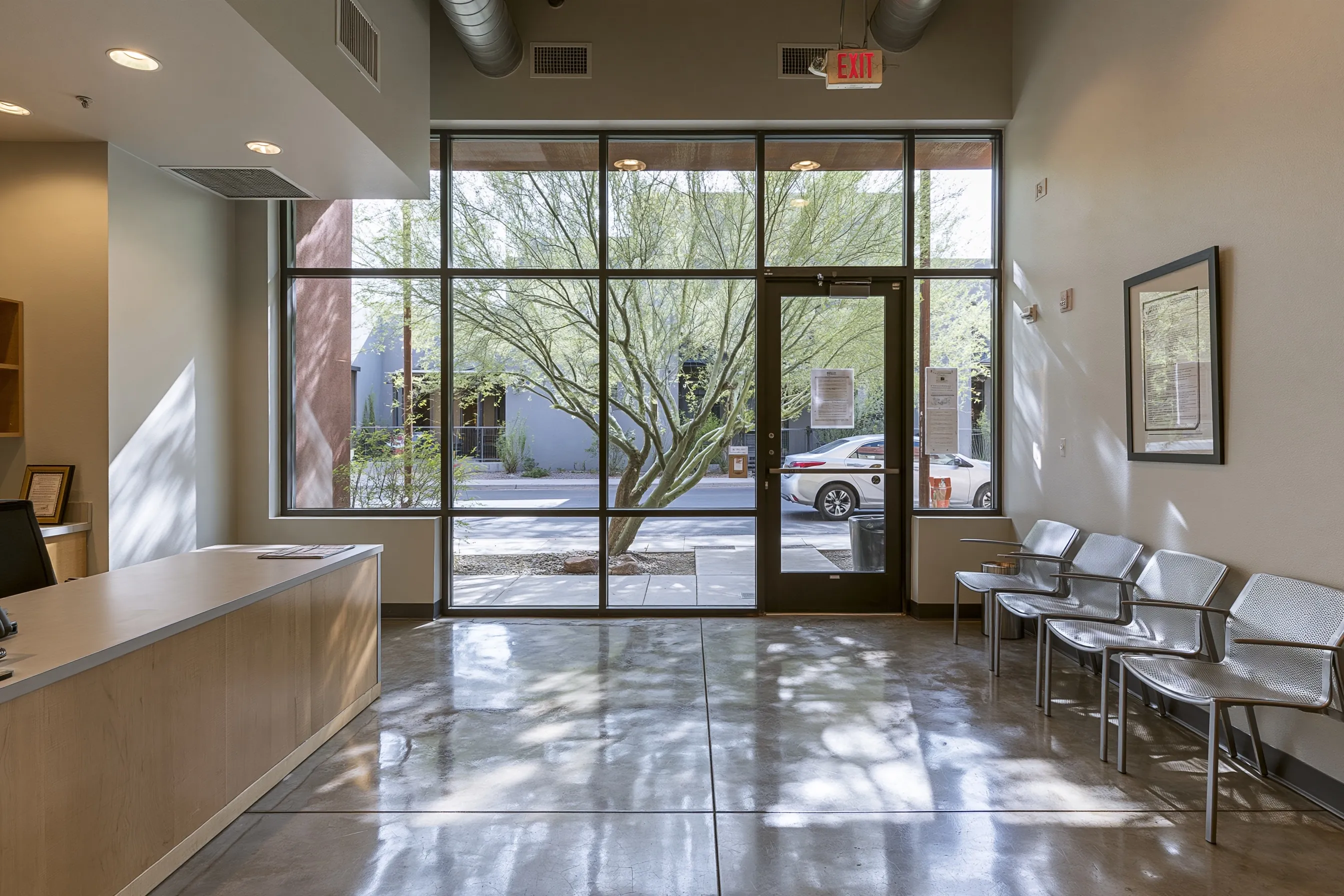
The four appearance levels (flat, satin, polished, high polish) give you a shared vocabulary for agreeing a finish with an architect or landlord. Shine says little about grip, so test any area that will get wet, such as a kitchen or an entrance.
Older buildings and old flooring
Floor tile and black mastic in an older building can contain asbestos. Maricopa County’s Air Quality Department handbook describes commercial buildings as facilities under its asbestos rule, and says resilient floor covering becomes regulated material when it is ground, so test suspect flooring before any grinding.
Old tile or coatings that must come up before anything else are handled under concrete floor restoration. A back room that wants only a sealed finish may fit grind and seal concrete floors better. For the full range of floors we take on, start from the Gilbert Polished Concrete home page.