What the slab decides
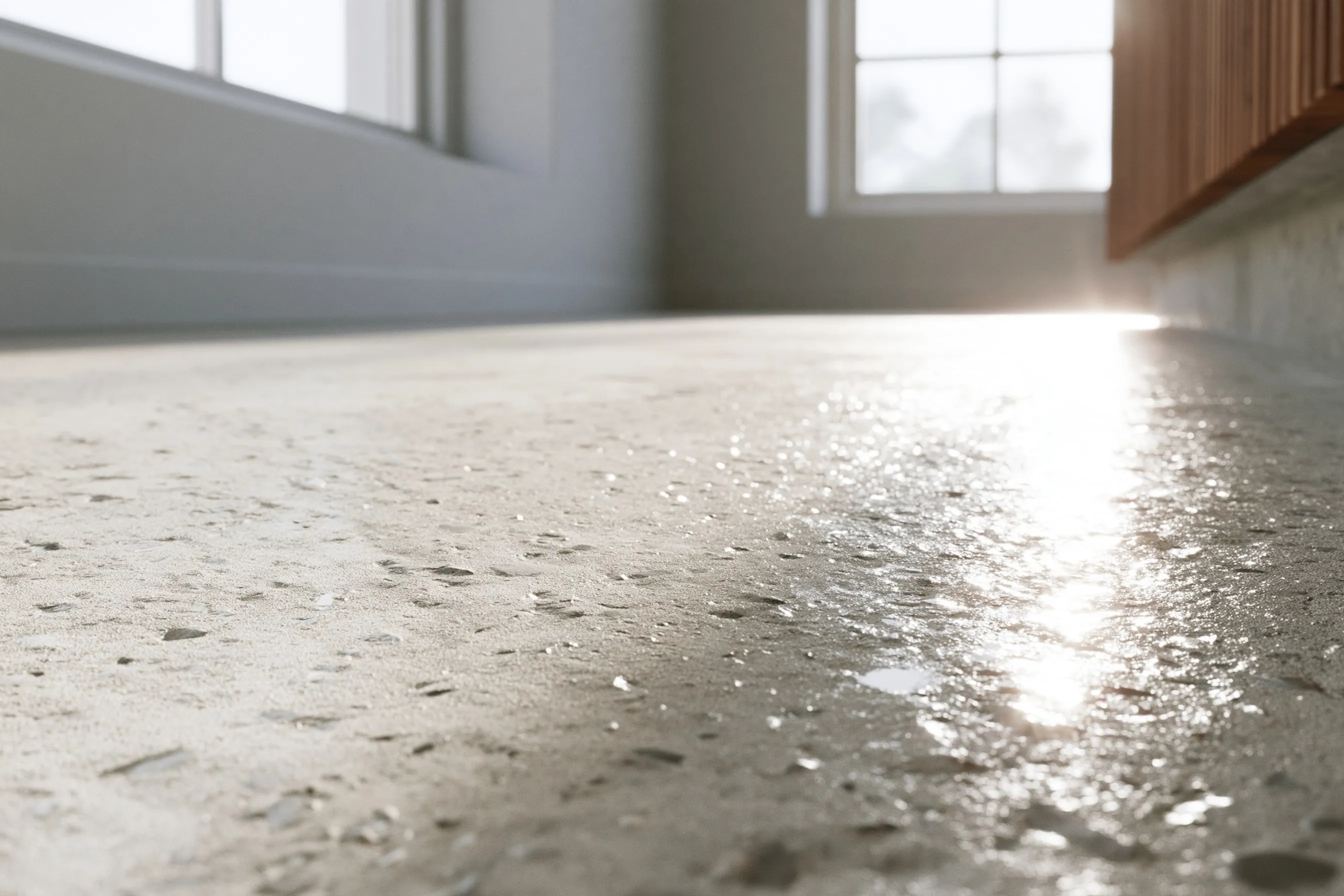
Color rides on the concrete. Cream, salt-and-pepper and aggregate looks take color differently, patches and cracks show, and an area that was repaired can read as a different tone. A weak surface may not take a finish evenly, which is why a hardness test and a test spot come first and why a mockup should be approved before the whole floor is colored.
A newer slab brings its own variables: admixtures can cause color variation, and a slab without a vapor barrier can show moisture-driven color differences. Variation is part of the character of a colored concrete floor, and it is better to expect it than to be surprised by it.
Color choices
Three directions are a starting point, and a test spot settles the exact shade:
- Warm: terracotta and sand tones that suit stucco walls and desert light
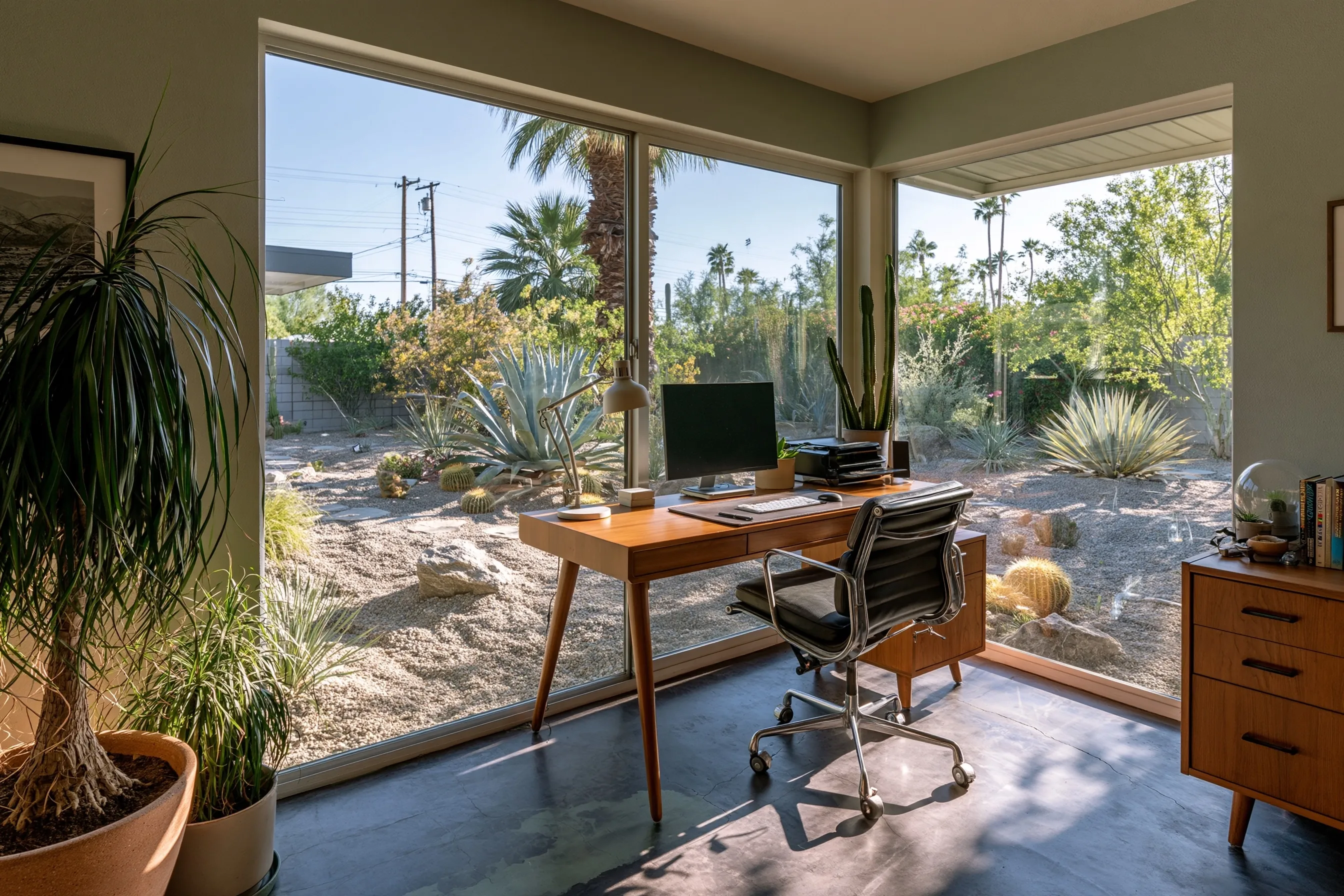
- Soft: sage and gray-green for offices and bedrooms
- Dark: charcoal for garages and modern living areas
Shades are chosen from samples on your own slab, since the same dye reads differently on cream and on salt-and-pepper concrete.
Caring for colored concrete
Clean a colored floor the way you would any polished floor: sweep, damp mop with the cleaner recommended for the finish and wipe up acidic or alkaline spills quickly. A guard is optional, and whether a floor has one depends on how it was finished.
Sun can alter some colors and not others, depending on the product, so a floor beside sliding doors deserves a look at the maker’s data sheet first. No tint comes with a promise that it will never shift.
Color in the slab is the subject here. For a colored garage, the polished concrete garage floors page covers that floor; the Gilbert Polished Concrete home page lists everything else we offer.