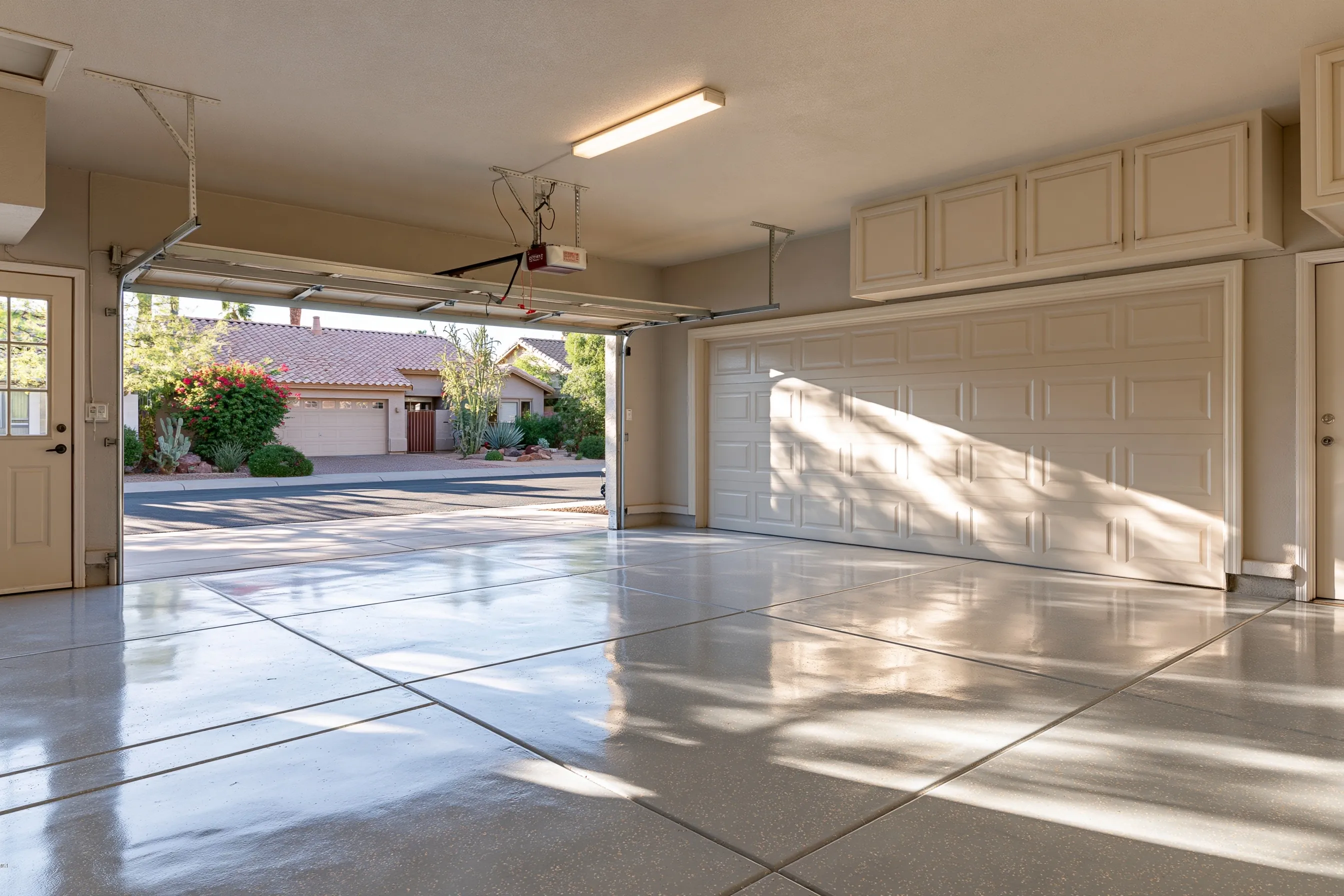
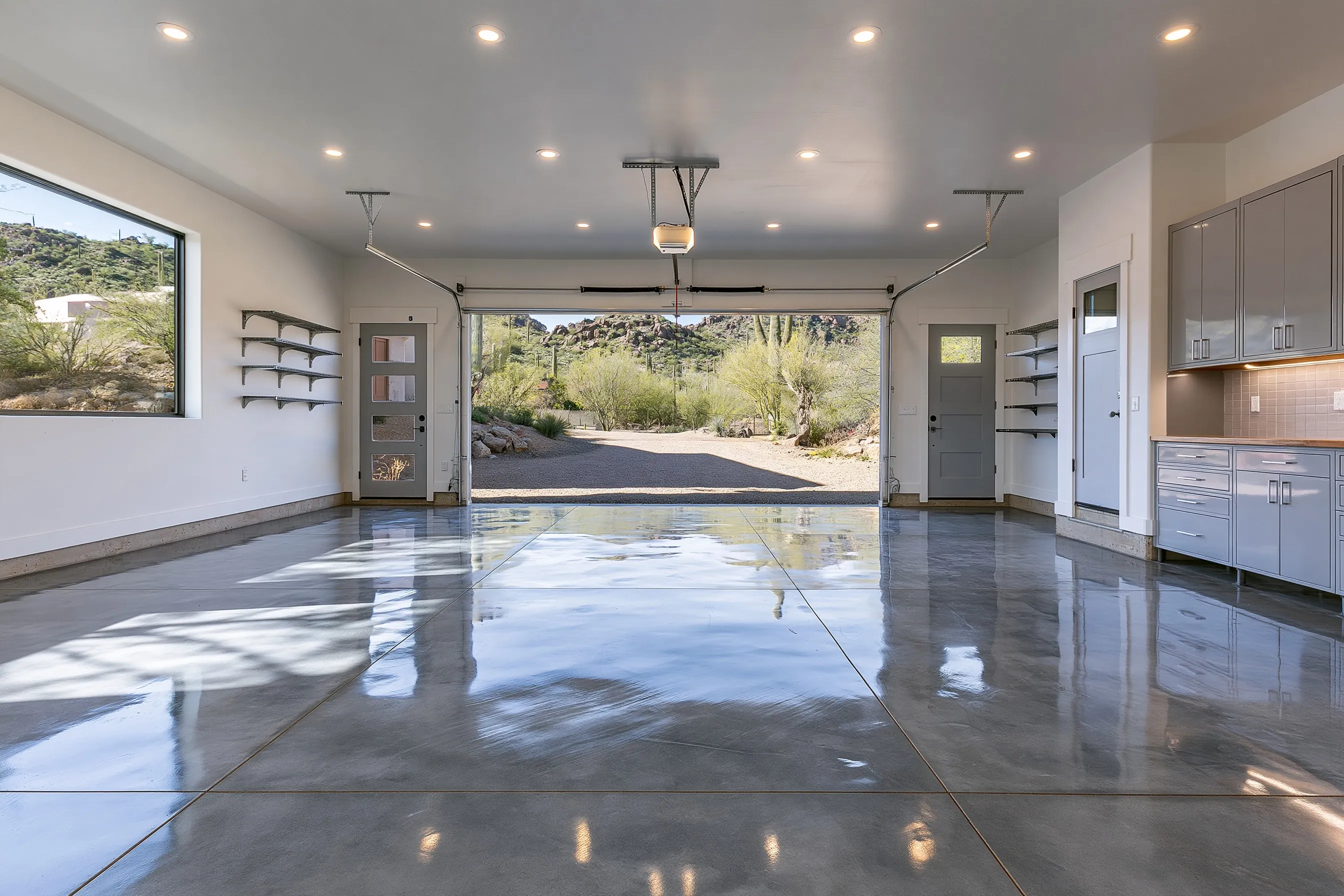
The builder slab underneath
A garage slab was poured and finished to carry cars, not to be looked at. Expect trowel marks, saw-cut control joints, hairline cracks and oil spots. Control joints are planned cracks that guide where the concrete splits and do not stop cracking, and they stay visible on a polished floor, where they are usually filled.
Polishing does not flatten a slab, and it shows flaws more clearly as the shine goes up. Before polishing, the surface is tested for hardness, since ACI 310.1 calls for a Mohs hardness above 4, and a test spot shows how a stain or an old coating responds before the whole floor is committed.
Finish options
The grind depth sets the look: cream, where mostly cement paste shows, salt-and-pepper, where fine aggregate appears, or deeper. Satin is the matte stage and polished or high polish reflect more light. Garage floors can also take dye. The stained and dyed concrete floors page covers color.
A mockup shows the finish on your slab before the rest is done, since two garages poured by different crews can grind to different looks.
Oil, chemicals and wet floors
Polished concrete is not chemical containment. Acidic and alkaline spills should be wiped up promptly, and oil and grease can leave the surface slippery.
A glossy surface tells you nothing about grip, and wet or oily patches make polished concrete slick. Put a mat where you step in from the house, and test a floor that will be hosed down or wet. No finish of ours is called slip resistant.
A three-car builder slab does not always call for the full treatment; grind and seal concrete floors sets out the lighter sealed route, and the Gilbert Polished Concrete home page shows what else we do.